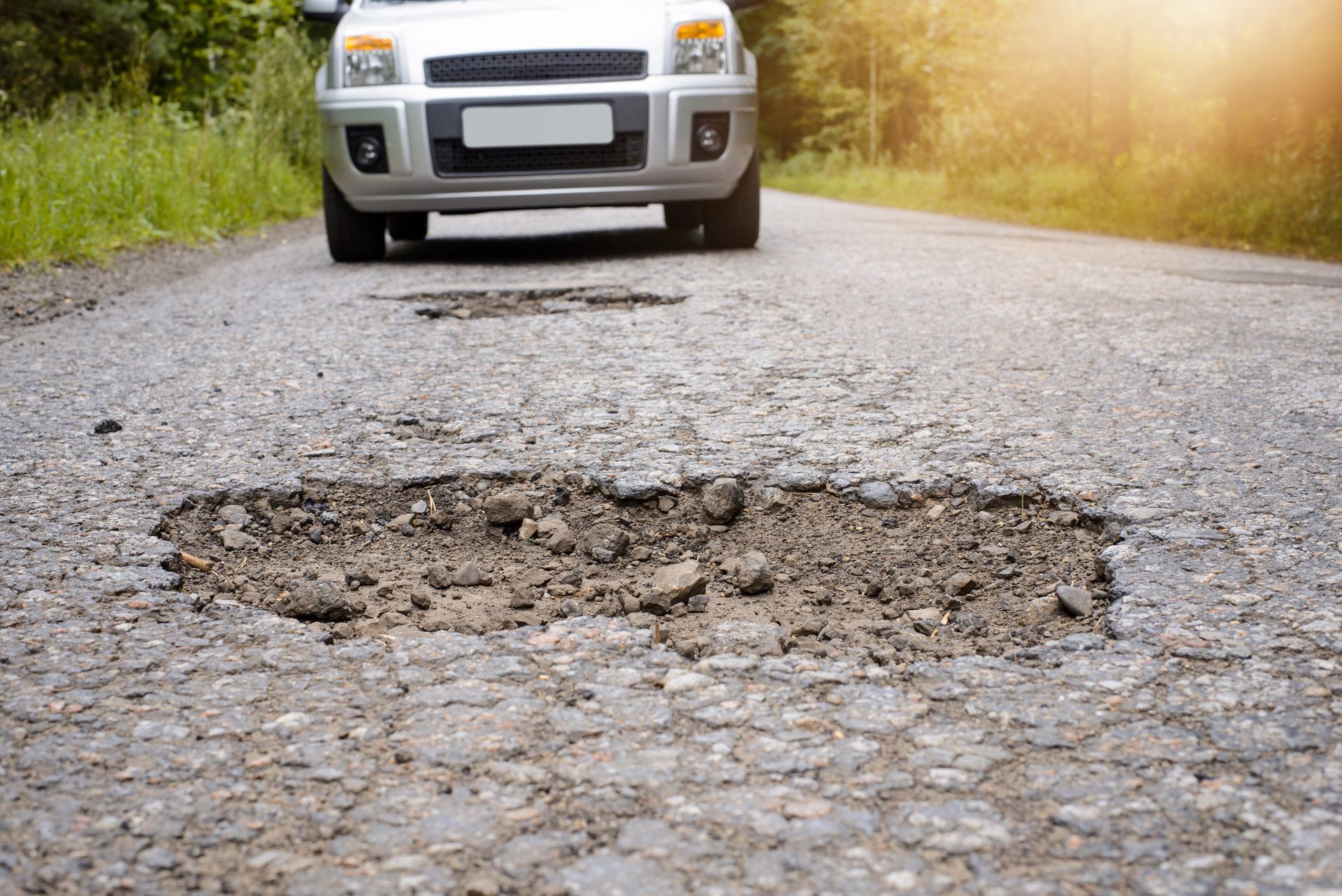
You drive across a speed bump and expect the suspension to settle after one movement. Instead, the body keeps rocking, the steering feels less settled, and the next corner takes more effort than it used to. The change tends to sneak up over months, so it is easy to forget how the car felt before.
Repeated bouncing is a useful sign that the suspension needs a closer look.
Worn Shocks and Struts Cause Repeated Bouncing
Coil springs support the vehicle's weight and absorb the first part of a bump. Shock absorbers and struts control how quickly those springs compress and rebound. Without proper damping, the body keeps moving after the wheel has passed over the rough spot.
A shock that's lost its ability to control movement leaves the rear of the car rocking after a driveway entrance. Worn front struts contribute to excessive nose dive during braking or a floaty feeling over rolling pavement. Not every worn damper leaks visibly. Some lose internal effectiveness without leaving an obvious oily streak, which is why how the car behaves on the road is an important part of the inspection.
How Excessive Suspension Bounce Affects Vehicle Stability
The tires need consistent contact with the road to steer and stop effectively. When the suspension keeps oscillating, tire loads change as the body moves. On rough pavement, weak damping often reduces how well the wheels follow the surface, particularly during braking or cornering.
You feel the car sway during a quick lane change, pitch forward under braking, or react nervously to repeated bumps. Wet or uneven roads make those changes more concerning. We don't judge suspension conditions only by whether the vehicle is comfortable. Stability and the way the tires follow the road are part of why worn shocks and struts deserve attention.
Pay attention to how the car behaves after a bump or during a turn:
- The body keeps bouncing after the road levels out
- The front end dips heavily during braking
- The rear end sways during lane changes
- One tire shows cupped or scalloped wear
- A clunk comes from the suspension over rough pavement
Each symptom helps narrow down which suspension parts need the closest look.
Control Arm Bushings and Ball Joints That Feel Loose
Shocks aren't the only components controlling how a suspension moves. Control arm bushings allow controlled movement while keeping the wheels in the right position. Ball joints, tie rods, and other connections help maintain steering geometry. When those parts wear, the wheels shift more than intended over bumps.
That sometimes feels like the car is stepping sideways slightly or steering itself after hitting uneven pavement. A clunk over bumps or unexpected movement through the steering wheel is worth paying attention to. A failed sway bar link commonly makes noise, but it won't normally explain every bounce on its own. We inspect the complete front and rear suspension rather than replacing dampers because the car feels loose. Several worn parts together leave the car feeling much looser than one worn part alone.
Tire Pressure and Tire Wear That Make Bouncing Worse
A tire with low pressure flexes differently over a bump, while an overinflated tire makes impacts feel harsh. Cupped or uneven tread can produce vibration and noise that drivers associate with worn shocks. Poor damping can also cause unusual tire wear over time, so the relationship goes both ways.
We check tire pressure, condition, tread pattern, and wheel damage before drawing conclusions. A bent wheel from a pothole makes the vehicle shake even when the suspension itself is still reasonably tight. If the car started acting differently right after striking a deep pothole or curb, tell us. That timing can narrow the search to impact damage rather than gradual suspension wear.
Broken Coil Springs and Strut Mount Problems
A coil spring supports the vehicle's height, so a broken or sagging spring sometimes leaves one corner sitting lower. In areas with winter road salt, corrosion can weaken spring ends over time. A broken spring produces popping or rattling as the suspension moves, while the sharp end sometimes rubs against nearby parts.
Upper strut mounts and their bearings sometimes wear as well. Knocking over bumps or binding while steering points us toward the strut mounts and joints. Replacing a strut without inspecting its mount or spring leaves the repair incomplete. We check ride height and inspect the condition of the parts around a noisy or ineffective damper.
How Our Technicians Diagnose Unstable Suspension
A road test helps us understand whether the vehicle continues rocking, rattles over small bumps, wanders while steering, or reacts unusually during braking. Each pattern points us toward a different group of components. We then lift the car and inspect dampers, springs, mounts, bushings, joints, steering parts, and tires.
A simple push on the bumper doesn't reliably identify every weak shock, especially on modern suspensions. We look at leakage, physical damage, mounting security, and road behavior together. If a part is worn enough to affect alignment, we account for that in the repair plan. An alignment performed before fixing looseness is unlikely to stay accurate.
When a Bouncy Car Becomes Unsafe to Drive
A small change in ride quality is different from a vehicle that feels difficult to control. If the car wanders sharply, bottoms out repeatedly, has a visibly broken spring, or feels unstable during braking, avoid highway speeds and arrange an inspection promptly. A loose steering or suspension connection becomes a serious safety concern.
When the change is gradual, it's tempting to adapt to it. Many drivers only realize how far the suspension has deteriorated after the worn components are repaired. Don't wait for the tires to develop severe uneven wear or for an emergency maneuver to show how much control has been lost.
Get Shock, Strut, and Suspension Repair in Lake Geneva, WI, With Mike's Auto Repair
Mike's Auto Repair in Lake Geneva, WI, inspects the shocks, struts, springs, bushings, and tires when the vehicle keeps bouncing after bumps.
Get the suspension checked before the unstable ride affects your next hard stop or sudden turn.