Pothole season in Lake Geneva has a way of turning a normal drive into a guessing game. You hit a sharp edge, the car jolts, and everything seems fine for the next mile. Then a few days later, you notice the steering feels a little off, or a tire is losing air, or the car has a new vibration you can’t ignore.
That delay is common, and it’s why a simple checklist right after a pothole hit can save you from ruining a tire or driving around with a bent wheel.
Why Potholes Create Problems That Show Up Later
A pothole impacts the tire and wheel fast. The tire can absorb some of it, but the rim, suspension joints, and steering components take a hit too. Some damage is immediate, like a bent rim, but other damage is more subtle. A tire can develop an internal bruise that doesn’t show from the outside right away. A steering component can loosen slightly and then get worse as you keep driving.
The goal is to catch the early signs while the fix is still simple, instead of waiting until the tire wears unevenly or the vibration gets strong enough to make every highway drive annoying.
Start With Tire Pressure And Sidewall Check
First, check tire pressure within a day of the pothole hit. If one tire drops faster than the others, that’s a clue you may have a bead leak, a damaged valve stem, or a rim issue. Even if the tire is only a few pounds low, don’t ignore it. Low pressure builds heat, and heat is what damages tires from the inside.
Next, look at the sidewall carefully. Bulges, bubbles, or fresh scuffs near the rim area can point to impact damage. If you see a bulge, that tire needs attention right away because it can fail without much warning.
Look For Wheel Damage You Might Not See At First
A lot of bent rims happen on the inner lip, not the outer face. That means you can stare at the wheel and think it looks fine. Clues include a vibration that shows up at a specific speed range or a tire that keeps losing small amounts of air with no nail in the tread.
If the steering wheel shake gets worse on smooth roads, or balancing seems to help briefly but the vibration comes back, a bent wheel becomes more likely.
Test Drive Cues That Point To Alignment Or Steering Issues
After a pothole hit, pay attention to how the car tracks. If the steering wheel sits off-center on a straight road, alignment may have shifted. If the car drifts or pulls, especially on flat pavement, it’s worth checking. Another clue is a car that feels nervous at speed, like you’re making constant small corrections to keep it straight.
Also listen for new noises. A clunk over bumps, a clicking sound when turning, or a new rattle can point to a joint or bushing that got stressed by the impact.
Steering And Suspension Spots That Take The Hit
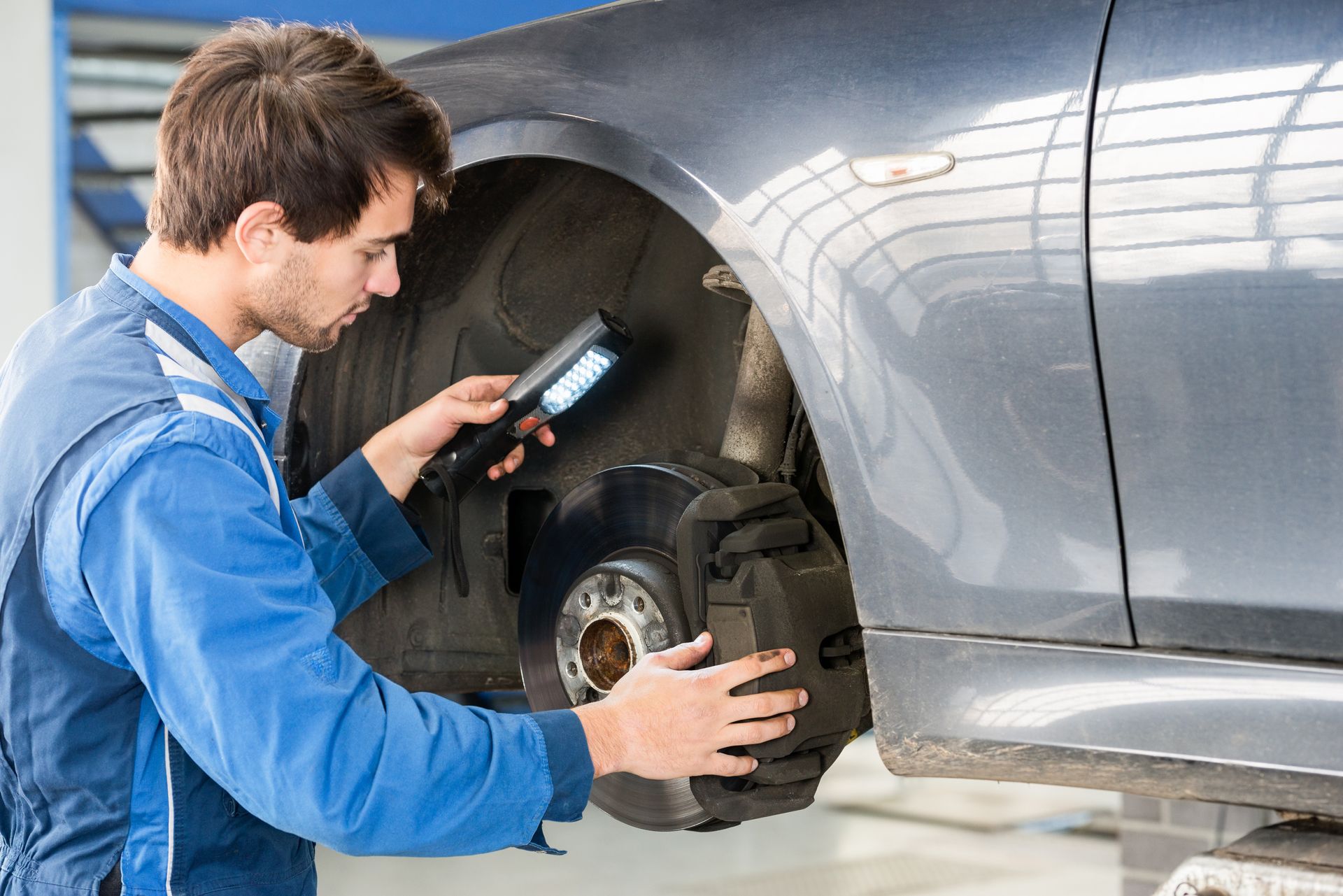
Potholes commonly stress tie rods, ball joints, control arm bushings, and struts. Even if nothing is visibly broken, extra play can show up. Sometimes the car feels fine around town but loose on the highway. That’s because small looseness becomes more noticeable at higher speeds and during lane changes.
We’ve seen drivers chase tire balance when the real issue was a worn tie rod that became worse after a pothole hit. That’s why checking the front end for play is part of the smart plan, not an extra.
When An Alignment Alone Won’t Fix It
Alignments correct angles, but they can’t correct a bent wheel, a tire with internal damage, or loose suspension parts. If a shop aligns the car without inspecting for play, the numbers may look better on paper, but the car may still wander or wear tires unevenly. A proper approach is to make sure the suspension and steering are tight first, then set the alignment.
If your tires have already developed uneven wear, an alignment will stop it from getting worse, but it may not erase the vibration or noise the tire has already built into the tread.
A Cost-Smart Plan Right After A Pothole Hit
If the pothole hit was minor and everything feels normal, keep an eye on pressure and handling for the next few days. If you notice a shake, a pull, or a tire losing air, don’t wait for it to become obvious. The earlier you check it, the more likely you are to save the tire and avoid secondary damage.
It’s also smart to avoid aggressive driving until you know the wheels and tires are okay. Hard braking and sharp turns put extra stress on a tire that may already be bruised.
Get Tire, Wheel, And Alignment Help in Lake Geneva, WI with Mike's Auto Repair
If you hit a pothole and now you’re noticing a vibration, a pull, uneven wear, or a tire that won’t hold pressure, we can inspect the tires and wheels, check the steering and suspension for looseness, and verify alignment if needed. We’ll explain what we find and recommend a fix that actually solves the root issue.
Call
Mike's Auto Repair in Lake Geneva, WI, to schedule a pothole inspection and protect your tires before the damage spreads.